Halogen
Chlorine, Water Sensors

Many companies offer chlorine metering solutions but the technologies used are mostly of two categories : colorimetric/DPD or amperometric.
Colorimetric/DPD-based solutions have the advantage of the accuracy, but it has to be done with extreme care for the process. It can be automated, but the solution quickly becomes very expensive, both on capex and on opex (reagents, monthly site visit, tubing change, sample water & disposal,...)
Amperometric solutions are easier to automate and enable more frequent measures, without consuming reagents. In the traditional solutions, the reactive metal is a thin coating layer, applied on the electrodes.
Because it is such a thin coated layer, the electrodes must be protected. Any damage, scratch or oxidation, would instantly alter the metering profile of the electrode and the system would require recalibration.
Electrodes must thus be handled with great precautions and placed in some electrolytic gel, to avoid direct contact with the water. The gel must be applied with care, to avoid bubbles, and must be separated from the water by a thin semi-porous membrane.
This membrane is fragile and cannot be touched. Over time, it will age and accumulate residuals (especially in iron & manganese-rich environments), altering its porousness and affecting the system metering profile. The gel also, needs to be replaced regularly, making this method rather maintenance heavy. The system metering profile will drift over time and lose accuracy, imposing frequent recalibration.
From an operational point of view, Amperometric remained an expensive metering method, even though, compared to colorimetric/DPD method, you save on the reagents subscription... Until the Halogen Systems’ innovative solution arrived in 2020 !
The Halogen Systems’ innovation
In 2015, Halogen Systems launched a chlorine metering sensor for ballast water on ships. The challenge was to develop a reliable solution, for marine environments, able to sustain considerable pressures and work with very different salt waters around the globe, and that would require very limited maintenance.
In 2019, with over 1200 installations on ships, Halogen Systems’ chlorine sensor was adapted for drinking water distribution networks and other process water (cooling systems, reservoirs & tanks,...)
The innovation resides in one small feature, but that changes everything : it uses solid electrodes, not coated ones. Exit the protective gel and its fragile membrane... Exit the pressure limitation due to the membrane... Exit the frequent recalibration and maintenance...
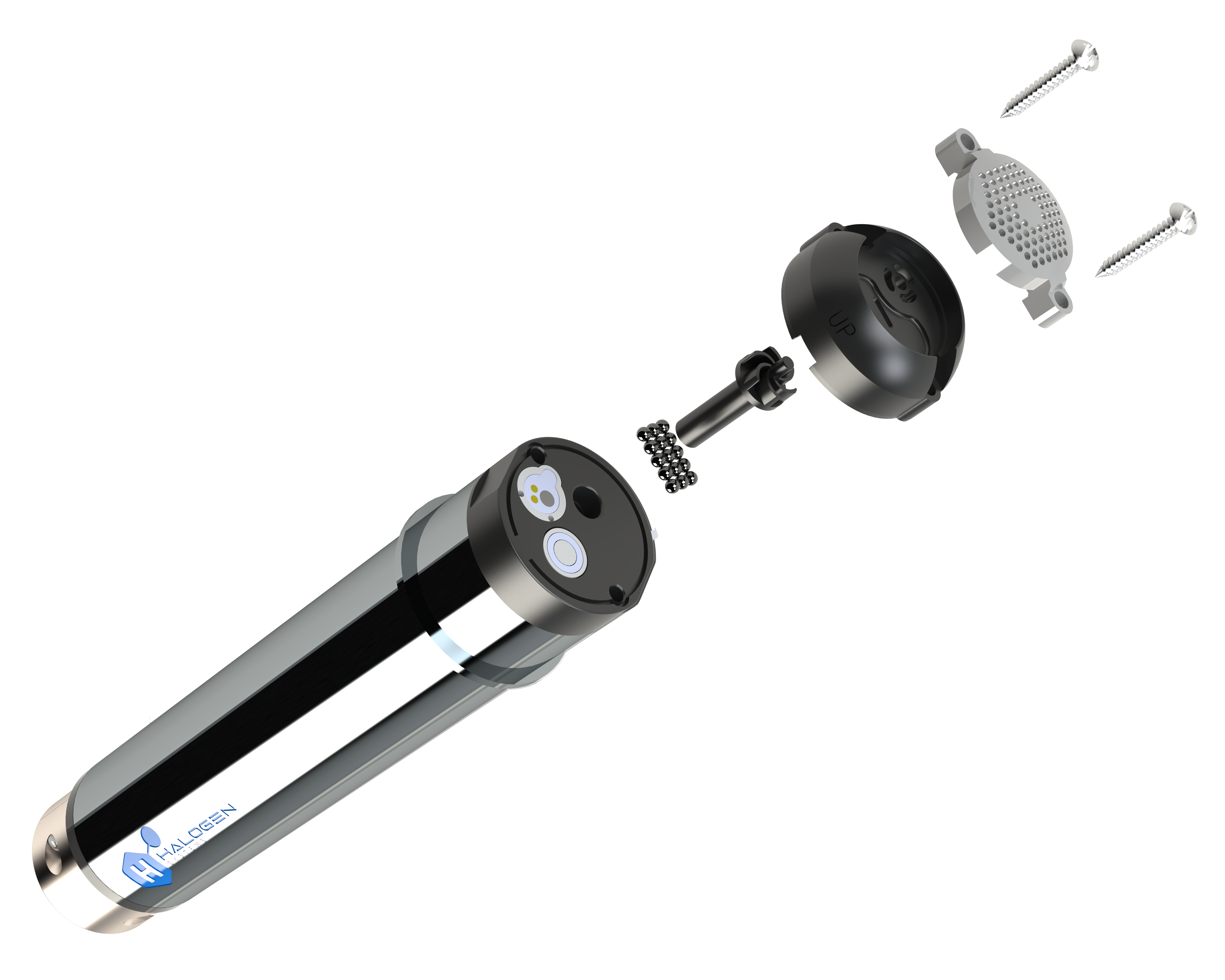
No need to protect the electrodes, they just need to be kept clean. That is where the sensor internal pump and the cleaning beads operate a miracle : the electrodes can be in direct contact with the water, allowing in-pipe metering, even under high pressure.
The benefits of using Halogen Systems chlorine sensors
Traditional amperometric metering systems are still widely used, but their accuracy depends on the metering profile of the sensor and this will drift over time. The first benefit of using Halogen Systems sensors is thus the accuracy and the reliability of the measures, that remain very high over a considerably extended period of time.
This is made possible as the MP Free sensor measures altogether Free chlorine, temperature, pH, conductivity and ORP, compensating for the effect of each on the chlorine measure.
Moreover, as the embedded pump guarantees a constant water flow, the sensor can still give a reliable measure in still water or when the flow inside the pipe varies.
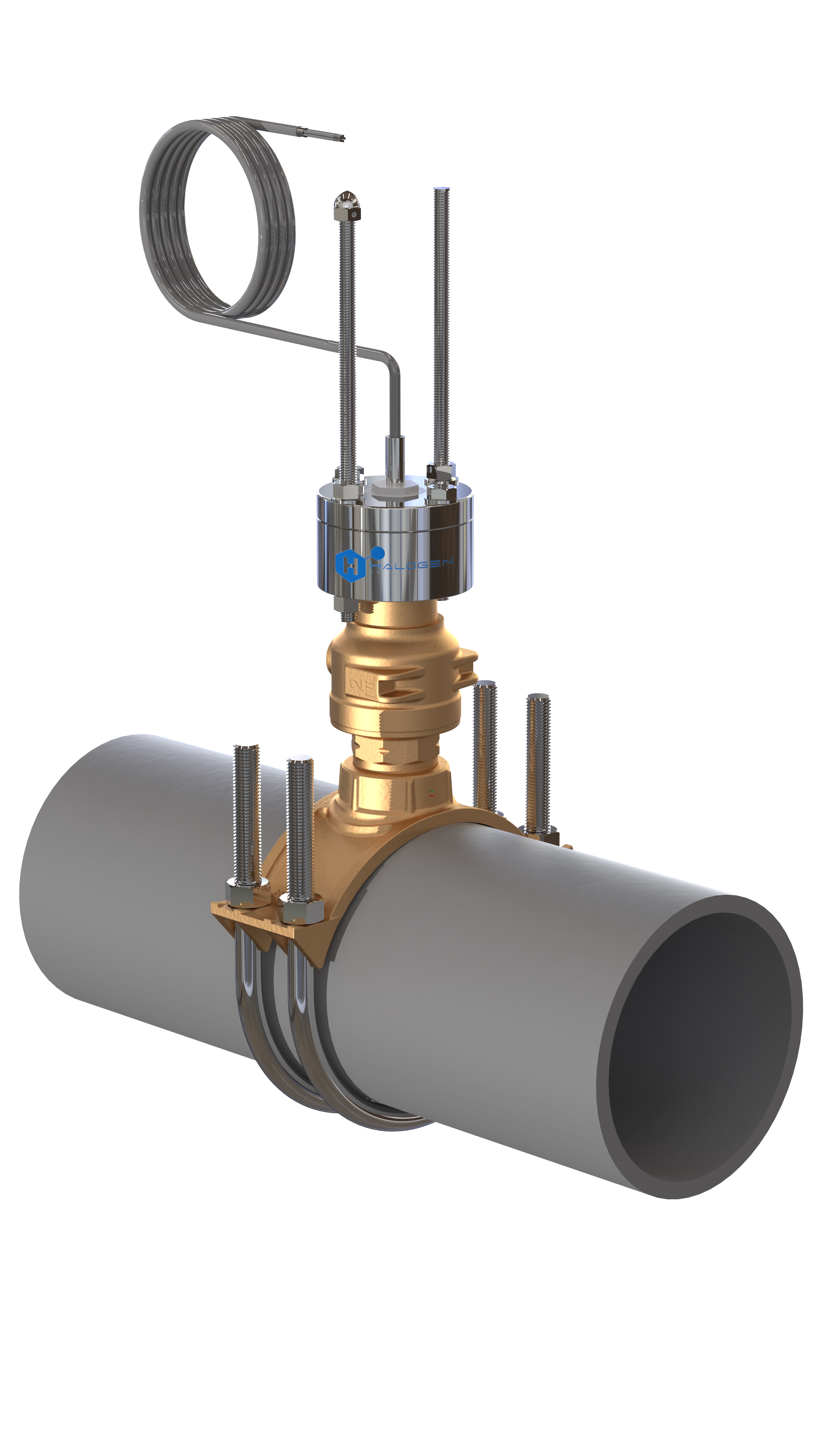
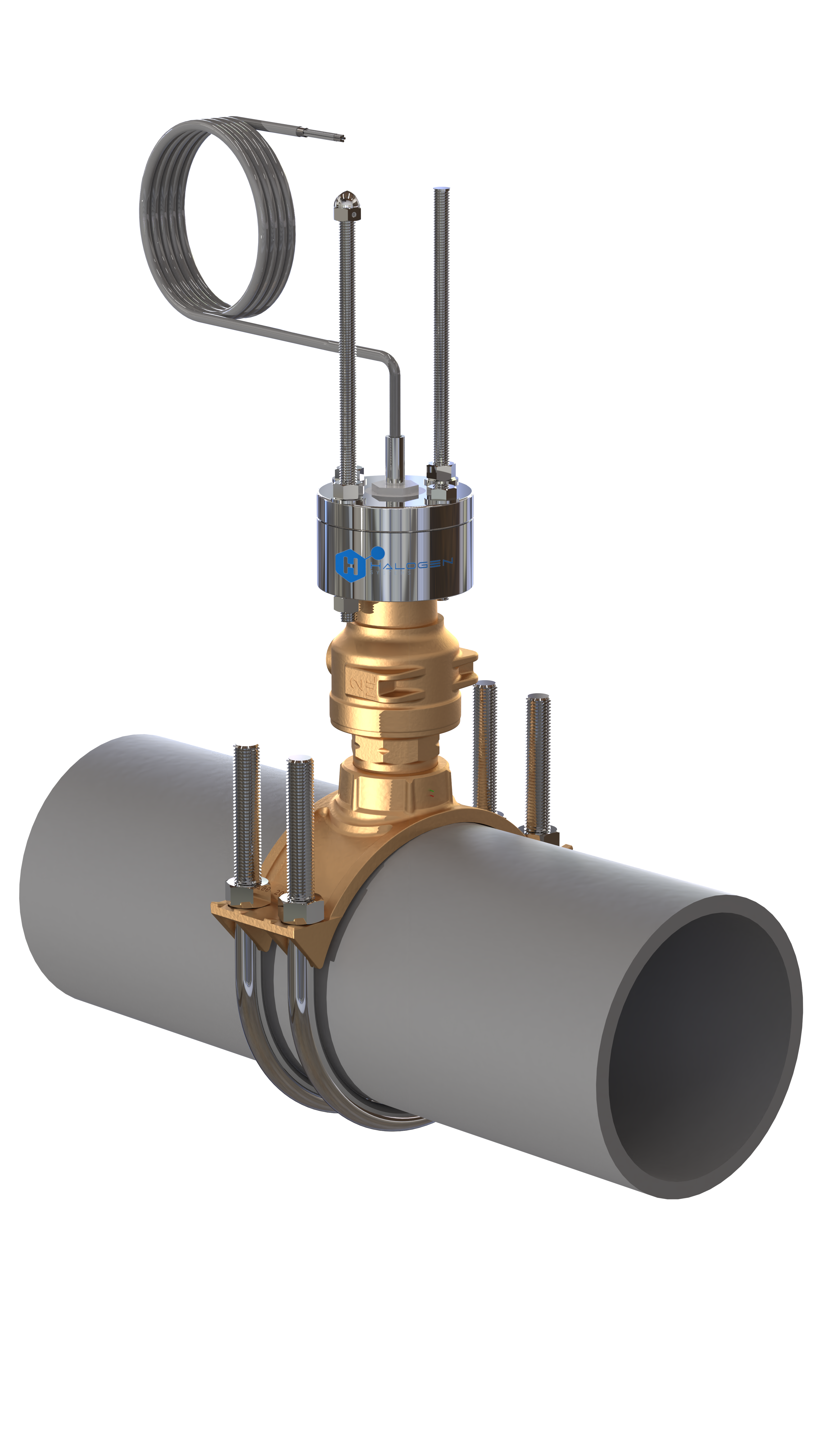
The absence of membrane allows to measure chlorine under high pressure (up to 10 bar). The sensor can thus take measures directly into the pipe, and requires no sample water stream. This means no water loss and no waste stream disposal.
At installation, there is no need for extra piping & plumbing. No need to re-pressurize the sample water to pump it back into the pipe either, so the sensor’s electrical consumption keeps minimal and can be battery operated.
Not only the number of maintenance visits is considerably reduced, maintenance operations are greatly simplified : no special care handling like for the gel or the membrane of other solutions, no system stabilization wait time, limited to no re-calibration needed, and no expensive consumables.
In addition, in clean water, you only need to replace the wear parts once a year, together with the pH sensor. The electrodes lifetime is about 5 years and they can be replaced as wear parts onsite, without replacing the whole sensor.
The accuracy and the reliability of the measures
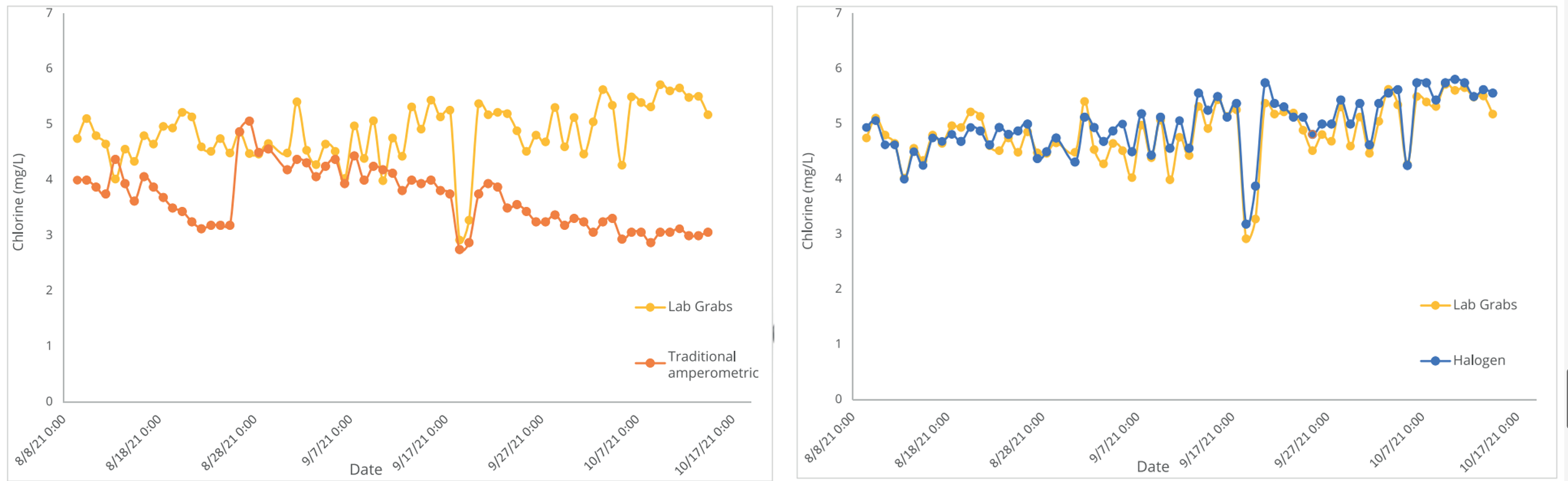
If, during your validation tests, Halogen sensor values deviate from your current solution, it is just… normal. Compare with a DPD test and check who’s right !